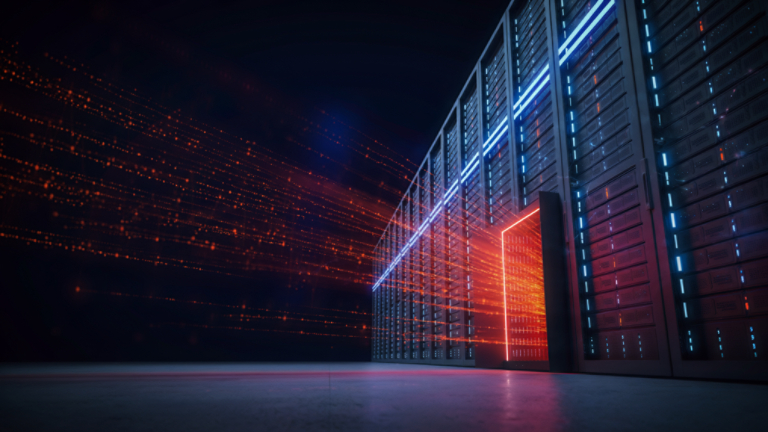

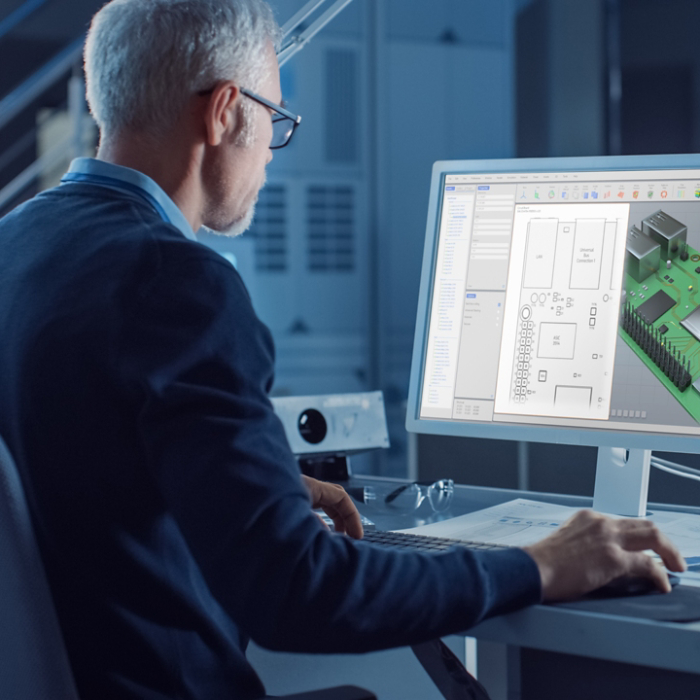
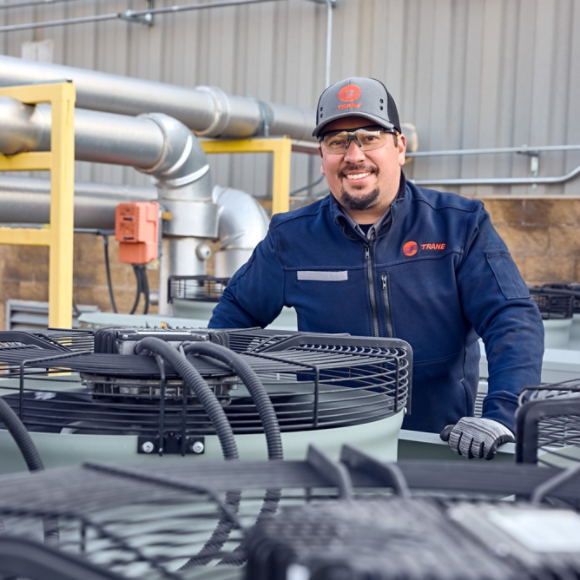

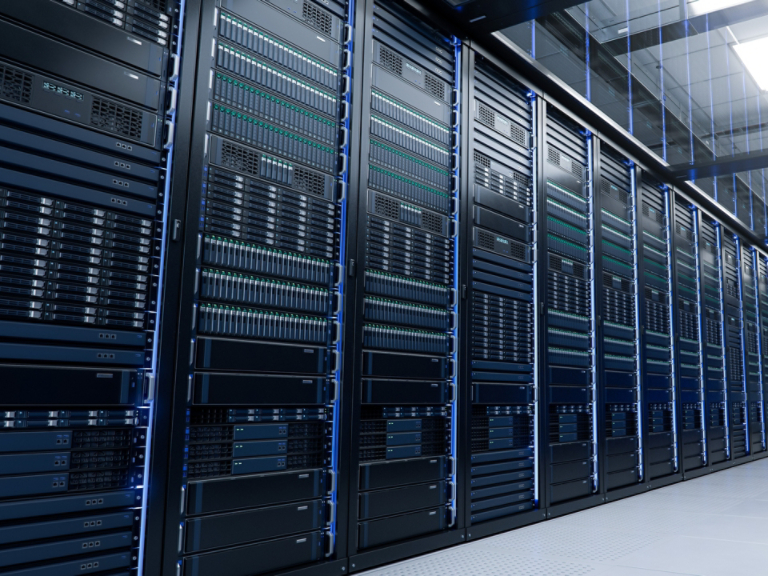
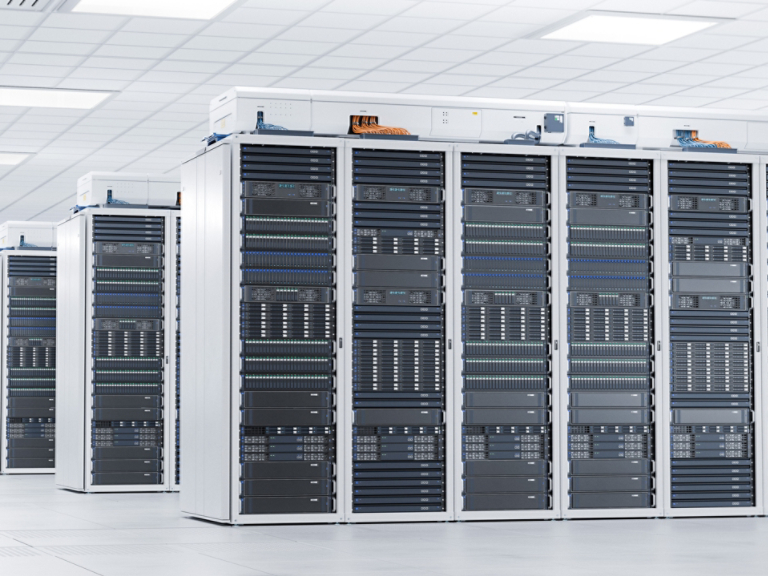


HVAC systems are essential for data centers to maintain optimal conditions for IT equipment. They regulate temperature and humidity, preventing overheating and equipment failures. Proper ventilation ensures good air quality and removes contaminants. HVAC systems also enhance energy efficiency by optimizing cooling and airflow, reducing energy consumption and costs. Advanced technologies like hot and cold aisle containment, free cooling, and liquid cooling improve efficiency. Regular maintenance and monitoring ensure effective operation. In summary, HVAC systems are crucial for data center reliability, performance, longevity, and energy efficiency.
Your top questions, answered.
Data Center Frequently Asked Questions
Servers generate heat when they process data. The amount of heat, or the density, that is generated needs to be removed from the chip to ensure proper operating temperatures and IT equipment reliability. Common methods include air cooling with CRAC or CRAH systems and hot/cold aisle containment or direct liquid cooling with fluid running through cold plates attached to the chips within the server. Immersion cooling, a method of cooling electronic components by submerging them in a thermally conductive dielectric liquid, is used in some applications by submerging servers in dielectric fluid to cool them. [See below questions/answers for more information on these technologies.] The thermal management system connects the chips and servers to the facility level heat rejection system that utilizes chillers, evaporative cooling, and/or free cooling systems to cool the entire facility. Advanced monitoring systems adjust cooling parameters to maintain optimal conditions and improve energy efficiency throughout the data center.
Data center cooling methods include air and liquid cooling, each with distinct benefits. Air cooling circulates cool air using CRAC or CRAH systems and often employs hot and cold aisle containment. It's easier to implement and maintain but less efficient in high-density environments and energy-intensive. Liquid cooling uses water or specialized coolants to directly absorb heat, offering higher efficiency due to better thermal conductivity. Methods include direct-to-chip cooling and immersion cooling. Liquid cooling supports higher server densities and reduces energy use but is more complex to design and maintain. The choice depends on data center size, density, energy goals, and budget. Air cooling is straightforward, while liquid cooling is more efficient for high-density setups.
Data center liquid cooling and immersion cooling are advanced methods for managing IT equipment heat. Liquid cooling circulates a coolant through cold plates attached to components like CPUs and GPUs, efficiently transferring heat and allowing for higher cooling efficiency, especially in high-density environments. It integrates well with existing server designs. Immersion cooling submerges entire servers in a dielectric fluid that absorbs heat directly. There are two types: single-phase, where the fluid remains liquid, and two-phase, where the fluid vaporizes and then condenses. While both methods outperform air cooling, liquid cooling is easier to integrate for targeted cooling.
Calculating data center cooling requirements involves several steps to manage the heat generated by IT equipment. First, determine the total power consumption of all equipment in kilowatts (kW), including servers, storage, and networking devices. Convert this power consumption into heat load, with one kW equivalent to approximately 3,412 BTUs per hour. Calculate the cooling capacity needed by dividing the total heat load in BTUs by 12,000 to get the required cooling capacity in tons. Consider factors like data center layout, airflow management, and cooling system efficiency. Hot and cold aisle containment can improve efficiency, and advanced cooling techniques like liquid or free cooling may affect requirements. Account for redundancy and future growth, ensuring cooling systems can handle peak loads and have backups. Regularly monitor cooling performance to identify improvements and maintain efficiency. When planning for the future, determine necessary adjustments to accommodate growth and other foreseen changes and work with a design professional to ensure code compliance. Following these steps ensures your data center can effectively manage heat and maintain optimal conditions.
To size your data center’s cooling system for future capacity, start by assessing the current heat load from IT equipment, measured in kilowatts (kW) and converted to BTUs per hour (1 kW = 3,412 BTUs/hr). Project future growth by estimating additional heat load from increased server density and higher-performance equipment. Ensure the cooling system can handle peak loads. Use modular cooling solutions for flexibility and scalability and consider advanced techniques like liquid or free cooling for efficiency. Incorporate redundancy for reliability, with backup systems to prevent downtime. Utilize DCIM tools to monitor cooling performance and optimize efficiency. Regularly update your cooling strategy based on industry trends. Collaborate with design experts for a scalable system. Additionally, consider data sovereignty requirements (the concept that digital data is subject to the laws and governance structures within the nation where it is collected, stored, or processed) and cloud freedom (the flexibility and autonomy that cloud computing offers to users) to ensure compliance and flexibility in your data management strategy.
Data center energy consumption varies based on size, design, and operational efficiency. Micro data centers might use around 100 kW, while larger ones can consume many MW, with some 1GW+ data centers in progress. For example, mid-sized data centers use between 1 to 5 MW, enough to power thousands of homes, and mega data centers can exceed hundreds of MW. Energy efficiency is crucial, with advanced cooling systems, efficient hardware, and renewable energy sources being employed. Metrics like Power Usage Effectiveness (PUE), Water Usage Effectiveness (WUE), and Total Usage Effectiveness (TUE) are used to measure and improve efficiency.
Data center efficiency involves using energy and resources effectively to maximize performance while minimizing waste and environmental impact. It includes efficient use of power, cooling, hardware, and space. Power Usage Effectiveness (PUE) is a key metric, measuring the ratio of total energy consumed to the energy used by IT equipment alone; a lower PUE indicates higher efficiency. Efficient data centers use advanced cooling techniques, energy-efficient hardware, and effective power management. They also employ virtualization and workload consolidation to maximize server utilization and reduce physical servers. Many are adopting renewable energy sources and sustainable practices to enhance efficiency and reduce their carbon footprint. Focusing on these areas can lead to cost savings, improved performance, and environmental sustainability.
Reducing energy consumption and improving efficiency in your data center can be achieved through several strategies. Optimize cooling systems with advanced techniques such as liquid cooling or immersion cooling and regular maintenance. Improve server utilization by consolidating workloads, using virtualization, and implementing dynamic power management. Choose facility level systems that utilize free cooling when ambient conditions allow. Upgrade to energy-efficient hardware and opt for SSDs and high Energy Star ratings. Use energy management software to monitor and manage usage and enhance power distribution with efficient PDUs and UPS. Adopt renewable energy sources, purchase renewable energy credits, and partner with green energy providers. Conduct regular audits to identify inefficiencies and continuously monitor energy usage.
Heat recovery in data centers involves capturing and reusing waste heat generated by servers and other IT equipment to improve energy efficiency. This process can significantly reduce the cooling load on HVAC systems, lower energy consumption, and provide heating for nearby buildings, leading to substantial cost savings. Additionally, it helps reduce the carbon footprint and aligns with sustainability goals by decreasing reliance on external energy sources. Implementing heat recovery systems enhances the overall efficiency and resilience of data centers, while also aiding in regulatory compliance and potentially benefiting from energy efficiency incentives.
Free cooling is a method that enhances data center efficiency by utilizing naturally cool external air or water to dissipate heat, reducing reliance on traditional mechanical refrigeration systems. This approach, which includes air-side and water-side free cooling, leverages favorable ambient environmental conditions to lower temperatures within the data center. By minimizing the use of energy-intensive chillers, free cooling significantly cuts energy consumption and operational costs, reduces the carbon footprint, and extends the lifespan of cooling equipment. This sustainable cooling solution supports scalability and aligns with environmental and regulatory goals, making it a cost-effective and efficient choice for data centers.
Direct liquid cooling (DLC) enhances data center efficiency by using liquids to remove heat directly from components, which is more effective than air cooling. This reduces the need for energy-intensive air conditioning systems and minimizes the heat that needs to be removed, cutting energy use. DLC maintains lower temperatures for IT equipment, improving performance and reliability while reducing thermal throttling. It allows higher server density without overheating, optimizing space and resources. The absorbed heat can be reused for heating or generating electricity, boosting energy efficiency and sustainability. DLC also simplifies data center design by reducing airflow management needs, leading to energy savings, reduced environmental impact, and improved equipment performance.
Power Usage Effectiveness (PUE) measures data center energy efficiency. It is calculated by dividing the total energy consumed by the data center (including cooling, lighting, and infrastructure) by the energy used by IT equipment (servers, storage, networking). The formula is PUE = Total Facility Energy / IT Equipment Energy. A lower PUE indicates higher efficiency, with 1.0 being ideal. PUE helps operators understand energy use and identify improvement areas. By optimizing PUE, data centers can reduce energy consumption, lower costs, and minimize environmental impact. Strategies to improve PUE include advanced cooling techniques, energy-efficient hardware, optimized power distribution, and using DCIM tools for continuous monitoring. Regularly benchmarking PUE against industry standards helps data centers stay competitive and achieve sustainability goals.
Calculating Power Usage Effectiveness (PUE) involves comparing the total energy consumption of a data center to the energy used by IT equipment alone. First, measure the total energy usage of the facility, including cooling, lighting, PDUs, and other infrastructure, in kilowatt-hours (kWh) over a specific period. Then, measure the energy consumption of the IT equipment (servers, storage, networking) in kWh over the same period. Calculate PUE using the formula: PUE = Total Facility Energy / IT Equipment Energy. A lower PUE indicates higher efficiency, with 1.0 being ideal. Regularly monitoring PUE helps identify inefficiencies and implement improvements, such as optimizing cooling, upgrading hardware, and enhancing power distribution. Lowering PUE reduces operating costs, minimizes environmental impact, and supports sustainability goals.
Improving Power Usage Effectiveness (PUE) in a data center involves enhancing energy efficiency and reducing energy consumption. Optimize cooling systems with techniques like hot and cold aisle containment, liquid cooling, or free cooling, and maintain equipment regularly. Upgrade to energy-efficient hardware with high Energy Star ratings and use virtualization to maximize server utilization. Implement advanced power management strategies, such as dynamic power scaling and power factor correction, and use high-efficiency PDUs and UPS. Monitor energy usage with DCIM tools to identify inefficiencies and make improvements. Conduct regular energy audits and benchmark against industry standards. Adopt sustainable practices like recycling electronic waste, using eco-friendly materials, and integrating renewable energy sources. These strategies lead to energy savings, lower costs, and a more sustainable future.
Sustainability is defined as either scope 1, scope 2 (by 2030), or scope 3 (by 2050). A sustainable or green data center minimizes environmental impact and maximizes energy efficiency. These centers use energy-efficient hardware, advanced cooling techniques, and optimized power management, often measured by Power Usage Effectiveness (PUE). They prioritize renewable energy sources like solar, wind, or hydroelectric power and may purchase renewable energy credits (RECs). Efficient cooling systems and resource conservation practices, such as water-efficient cooling and recycling electronic waste, are key. Green data centers aim to reduce their carbon footprint and often seek certifications like LEED or ENERGY STAR. Continuous monitoring and optimization through data center infrastructure management (DCIM) tools help maintain efficiency.
Designing a green data center involves strategies to minimize environmental impact and maximize energy efficiency. Choose a site with renewable energy sources like solar or wind and utilize natural cooling opportunities. Optimize designs for airflow and cooling efficiency and use energy-efficient lighting and materials. Implement cooling techniques such as free cooling and liquid cooling and use water-efficient systems. Incorporate renewable energy by installing solar panels or wind turbines. Invest in energy-efficient hardware with high Energy Star ratings and use virtualization to maximize server utilization. Implement advanced power management and use high-efficiency PDUs and UPS. Deploy DCIM tools to monitor energy usage and conduct regular energy audits. Adopt sustainable practices like recycling electronic waste and using eco-friendly materials. Seek certifications like LEED or ENERGY STAR. Educate employees on sustainability. These steps help create a green data center that reduces environmental impact and lowers costs.
Meeting sustainability goals amid rising energy demands requires a multifaceted approach. Optimize energy usage with advanced cooling techniques like liquid and free cooling, and hot/cold aisle containment. Invest in energy-efficient hardware with high Energy Star ratings. Use virtualization to maximize server utilization and reduce physical servers. Integrate renewable energy sources like solar, wind, or hydroelectric power, and consider on-site systems or renewable energy credits (RECs). Implement energy management software and DCIM tools for real-time monitoring. Adopt sustainable practices such as recycling electronic waste, using eco-friendly materials, and conserving water. Conduct regular energy audits and benchmark against industry standards. Collaborate with technology partners and participate in industry initiatives. Educate employees and stakeholders on sustainability. These strategies will help your data center meet sustainability goals and manage rising energy demands.
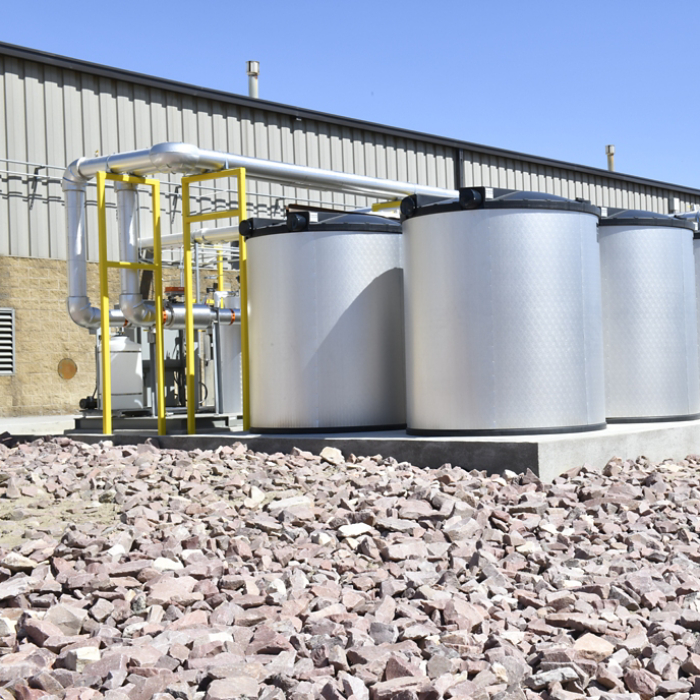
Thermal energy storage (TES) supports data center operations in two key ways: by enabling peak shaving—shifting cooling-related energy use to off‑peak periods to reduce strain on electrical grids and lower energy costs—and by providing thermal “ride‑through” capability during events such as power loss at the chiller plant. TES stores cooling energy during times of low demand and deploys it during periods of grid stress or during backup power and chiller restart sequences, ensuring uninterrupted cooling to the IT environment. By combining both peak shaving and ride‑through functions, TES enhances operational stability, supports participation in demand response programs, promotes sustainability through better integration of renewable energy, and helps data centers expand even in locations with grid constraints.
Securing power for a new data center involves careful planning and collaboration with utility providers. Assess power requirements, including servers, storage, networking, cooling, and future growth. Engage with utility providers early to discuss needs and explore options. Engage with trusted advisors to develop options for optimizing energy use, such as Trane’s energy services offering. Consider renewable energy sources like solar, wind, or hydroelectric power to supplement grid power and reduce your carbon footprint. Implement energy-efficient technologies and practices, such as efficient hardware, advanced cooling, power management and thermal energy storage. Ensure backup power solutions like UPS and generators are properly sized, maintained, and tested. Collaborate with design and engineering firms for a comprehensive power strategy. These steps ensure reliable and efficient operations for your new data center.
Data centers can increase token production by reallocating energy resources to optimize computational efficiency. This involves implementing advanced energy management systems to monitor and dynamically adjust power distribution, ensuring that critical processing tasks receive priority. By utilizing energy-efficient hardware and cooling solutions, such as liquid cooling and free cooling, data centers can reduce overall energy consumption and redirect saved energy towards token production. Additionally, integrating renewable energy sources and leveraging energy storage systems can provide a more stable and sustainable power supply, further enhancing the capacity for increased token production.
Acoustics are essential for data centers to comply with regulations, protect sensitive equipment from vibration, ensure staff comfort and health, and maintain positive community relations by reducing loud mechanical noise from cooling systems and generators, which can otherwise result in penalties, operational issues, or local complaints. Effective acoustic design addresses both internal noise affecting staff and sensitive storage (like HDDs) and external noise impacting nearby residents, balancing cooling efficiency with sound control through the use of specialized louvers, barriers, and enclosures.
The water needed to cool a data center varies based on cooling methods, facility size, and system efficiency. Traditional systems like cooling towers and chilled water systems use significant water to dissipate heat, especially in large data centers. Typical usage can range from thousands to millions of gallons annually. Efficient technologies, such as closed-loop systems and liquid cooling, reduce water usage by recirculating water or using specialized coolants. Air-cooled systems and free cooling techniques use ambient air, further reducing water needs. Implementing water-efficient practices, like optimizing cooling tower operations, deploying adiabatic assisted cooling, and using recycled water, helps minimize consumption. Regular monitoring and maintenance ensure optimal performance. Adopting these practices allows data centers to manage water usage effectively while maintaining efficiency.
Maximizing data center uptime is crucial for continuous operations. Implement redundancy measures like N+1, N+2, or 2N for power, cooling, and network systems. Invest in high-quality UPS and backup generators and regularly maintain and test them. Use DCIM software for real-time monitoring and proactive maintenance. Ensure robust physical and cybersecurity with multi-layered protocols and continuous monitoring. Develop and update a disaster recovery and business continuity plan, including data backup and system restoration. Train staff and conduct regular drills. Optimize cooling with hot and cold aisle containment and liquid cooling. Stay updated on industry best practices and technological advancements. These strategies will help to ensure uptime and reliable operations.
Lowering data center cooling costs involves both capital expenditures (CapEx) and operational expenditures (OpEx). For CapEx, invest in energy-efficient cooling systems like liquid cooling, advanced HVAC, and free cooling techniques. Modular data centers, hot aisle/cold aisle containment, raised floor systems, and energy-efficient building designs also help. On the OpEx side, regular maintenance, optimized temperature settings, energy management systems, virtualization, and advanced monitoring tools improve efficiency. Renewable energy sources can offset costs. Combining strategies like choosing cooler climates, using energy-efficient IT equipment, upgrading cooling systems, and training staff on best practices ensures optimal operation. These approaches can significantly reduce cooling costs while maintaining performance and reliability.
You cannot futureproof your data center but you can plan for the future by designing a scalable infrastructure with modular components for easy upgrades. Invest in energy-efficient, high-performance hardware and advanced cooling solutions like liquid or free cooling. Use virtualization and cloud technologies for better resource utilization and scalability. Implement software-defined data center (SDDC) principles for automated resource management. Ensure robust cybersecurity with multi-layered protocols and continuous monitoring. Plan for disaster recovery and business continuity. Regularly update infrastructure, stay informed on industry trends, and collaborate with technology partners. Adopt sustainable practices, such as using renewable energy. These steps will help to keep your data center adaptable, efficient, and secure.
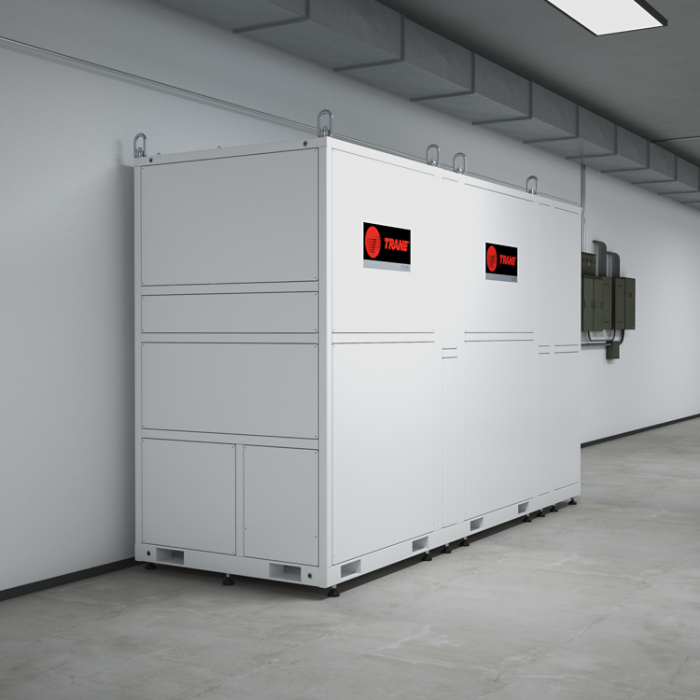
Trane provides tailored solutions for data centers, ensuring optimal performance, energy efficiency, and reliability. Our offerings include advanced cooling technologies like precision cooling, liquid cooling, and free cooling to reduce energy consumption. We offer modular cooling solutions for scalable capacity and HVAC systems that optimize airflow and heat dissipation with features like hot and cold aisle containment. Our energy-efficient HVAC units have advanced controls for real-time adjustments. Trane also provides energy management services with DCIM tools for real-time insights into energy use, temperature, and airflow. We integrate renewable energy sources and offer energy-efficient hardware aligned with sustainability initiatives. Our experts collaborate with clients to develop customized solutions from design to support, helping data centers achieve energy savings, enhanced performance, and reliable operations.
Heat recovery in data centers involves capturing and reusing waste heat generated by servers and other IT equipment to improve energy efficiency. This process can significantly reduce the cooling load on HVAC systems, lower energy consumption, and provide heating for nearby buildings, leading to substantial cost savings. Additionally, it helps reduce the carbon footprint and aligns with sustainability goals by decreasing reliance on external energy sources. Implementing heat recovery systems enhances the overall efficiency and resilience of data centers, while also aiding in regulatory compliance and potentially benefiting from energy efficiency incentives.
Free cooling is a method that enhances data center efficiency by utilizing naturally cool external air or water to dissipate heat, reducing reliance on traditional mechanical refrigeration systems. This approach, which includes air-side and water-side free cooling, leverages ambient environmental conditions to lower temperatures within the data center. By minimizing the use of energy-intensive chillers, free cooling significantly cuts energy consumption and operational costs, reduces the carbon footprint, and extends the lifespan of cooling equipment. This sustainable cooling solution supports scalability and aligns with environmental and regulatory goals, making it a cost-effective and efficient choice for data centers.
Water Usage Effectiveness (WUE) is a metric used to measure the efficiency of water usage in data centers, typically expressed in liters per kilowatt-hour (L/kWh). The formula is WUE = Annual Water Usage (Liters) / IT Equipment Energy Consumption (kWh). WUE helps data center operators understand how much water is being used to support the cooling and operation of IT equipment. A lower WUE indicates more efficient water use, which is crucial for minimizing environmental impact and managing resources sustainably. Factors influencing WUE include cooling systems, local climate, and water-saving technologies. By optimizing WUE, data centers can reduce water consumption, lower costs, and enhance sustainability.
Thermal energy storage (TES) supports data center operations by enabling peak shaving—shifting cooling-related energy use to off-peak periods—which helps reduce demand on strained electrical grids and lowers energy costs. TES stores cooling energy during times of low demand and dispatches it during periods of higher grid stress, ensuring reliable cooling and enhanced operational stability. TES also allows data centers to participate in demand response programs, promotes sustainability by facilitating the integration of renewable energy, and helps expand operations in locations facing grid constraints.
By employing advanced cooling technologies and strategies, data centers can adapt to unreliable ambient temperatures. These include microclimate control to create localized cooling zones, adiabatic cooling to pre-cool incoming air through water evaporation, and free cooling to leverage naturally cool external air or water. Additionally, liquid cooling methods like cold plates or immersion cooling efficiently dissipate heat from high-density equipment. Advanced monitoring and control systems allow for real-time adjustments based on current conditions, while redundancy and backup systems ensure consistent cooling performance.
Data centers can increase token production by reallocating energy resources to optimize computational efficiency. This involves implementing advanced energy management systems to monitor and dynamically adjust power distribution, ensuring that critical processing tasks receive priority. By utilizing energy-efficient hardware and cooling solutions, such as liquid cooling and free cooling, data centers can reduce overall energy consumption and redirect saved energy towards token production. Additionally, integrating renewable energy sources and leveraging energy storage systems can provide a more stable and sustainable power supply, further enhancing the capacity for increased token production.
Acoustics are essential for data centers to comply with regulations, protect sensitive equipment from vibration, ensure staff comfort and health, and maintain positive community relations by reducing loud mechanical noise from cooling systems and generators, which can otherwise result in penalties, operational issues, or local complaints. Effective acoustic design addresses both internal noise affecting staff and sensitive storage (like HDDs) and external noise impacting nearby residents, balancing cooling efficiency with sound control through the use of specialized louvers, barriers, and enclosures.
A swing chiller, or swing plant, is a supplemental cooling system used in HVAC applications, including data centers, to provide additional cooling capacity during peak demand periods. It activates when the primary cooling system cannot meet the demand, enhancing energy efficiency by preventing the need for oversized primary chillers. Swing chillers add redundancy and reliability, ensuring continuous cooling during maintenance or failures of the primary system. They also offer scalability for growing data centers and can lead to cost savings by optimizing cooling resources and reducing both capital and operational expenses.
Connect with an expert.
Still not sure which solution is right for you? Connect with a Trane expert.
Prefer to chat with someone at your local Trane office?
Opt-in and get the latest data center news
Stay informed on the latest trends and solutions to mitigate your challenges including waste removal, heat reuse, energy storage, noise pollution and more.